> ## Documentation Index
> Fetch the complete documentation index at: https://docs.trysoma.ai/llms.txt
> Use this file to discover all available pages before exploring further.
# Introduction
> Welcome to Soma
## Setting up
TLDR; Jump straight into building your first agent in minutes.
Follow our quickstart guide.
## Introduction
Soma is an open-source, self-hostable AI agent & workflow runtime designed for startups through to enterprise. It's self-hostable, a single binary and provides a security and governance plane across your agents.
You can use Soma to build many different types of workflows & agents, using plain old code. You can build:
* Chat / Turn based agents (see [example agent template](https://github.com/trysoma/typescript-ai-sdk-template/blob/main/agents/index.ts))
* Business process-style workflows (see [example agent template](https://github.com/trysoma/typescript-ai-sdk-template/blob/main/agents/index.ts))
* A combination of both (see [example agent template](https://github.com/trysoma/typescript-ai-sdk-template/blob/main/agents/index.ts))
See the quickstart guide for more details.
Key features include:
* Define your custom MCP functions and AI agents in regular code (Typescript supported, Python coming soon)
* Bring whichever tools and supporting frameworks you would like into Soma (e.g. Llangchain, Vercel AI SDK, etc.)
* Make your code fault-tolerant and resumable. Crash or suspend execution at any point and resume from where it left off
* Automatically get an A2A (Agent2Agent) and (coming soon) OpenAI Streaming compatable API endpoints to message your agent
* An MCP server pre-integrated with well known third-party SaaS providers that handles credential encryption and rotation for you
* A UI to debug your Agent & MCP functions, configure MCP provider credentials and see historical agent executions and chats
* Deployable to local desktop or cloud environments
Features that are landing soon:
* Fine-grained API key access management to restrict access to your agent
* Human in-the-loop approvals before actions are executed
* Outbound AI gateway to intercept all agent requests to model providers for deeper observability
This is all packaged into a single binary and leverages:
* [Resstate](https://resstate.dev) for fault-tolerance
* [Turso](https://turso.tech) (Sqlite) for data storage requirements
* Local, AWS or (soon)GCP KMS encryption for secrets management (MCP credentials, API keys, Agent secrets)
See our deployment guide for self-hosting instructions.
## Framework vs runtime
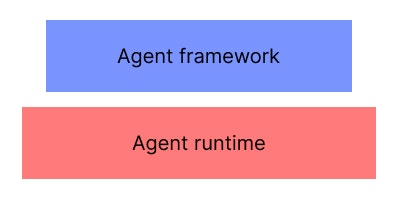 We view Soma as the bottom of the pyramind, providing the core building blocks for your agent and providing a DX to increase developer velocity.
You can use any framework you want to build your agent, including:
* Vercel AI SDK
* Langchain
* OpenAI Agents SDK
Whilst we don't have lower level language bindings for all of these libraries just yet, you can still use them with Soma directly. Soma provides:
* A secure MCP server for your agent to use
* A ready to use OpenAI Streaming and Agent 2 Agent compatible API endpoints to message your agent
* MCP and agent chat debug tools
* An easy path from local development to production
* API credential management (i.e. protect the chat endpoints via API key, Oauth, etc.)
* Human in-the-loop approvals
* Fault tolerance and resumability
all of which compliment your chosen framework and agent / workflow business logic.
## SDK support matrix
| Language | Platform | Status |
| ---------- | --------------------- | ------ |
| Typescript | Mac OSX X86 | 🟢 |
| | Mac OSX AARCH / ARM | 🟢 |
| | Linux GNU X86 | 🟢 |
| | Linux GNU AARCH / ARM | 🟢 |
| | Windows | ⚪ |
| Python | Mac OSX X86 | 🟢 |
| | Mac OSX AARCH / ARM | 🟢 |
| | Linux GNU X86 | 🟢 |
| | Linux GNU AARCH / ARM | 🟢 |
| | Windows | ⚪ |
| Rust | Mac OSX X86 | ⚪ |
| | Mac OSX AARCH / ARM | ⚪ |
| | Linux GNU X86 | ⚪ |
| | Linux GNU AARCH / ARM | ⚪ |
| | Windows | ⚪ |
Windows support is planned however it's not natively supported due to our use of Unix domain sockets in Rust ( [related issue](https://github.com/openai/codex/pull/5350) )
Get started and run your first agent in minutes
We view Soma as the bottom of the pyramind, providing the core building blocks for your agent and providing a DX to increase developer velocity.
You can use any framework you want to build your agent, including:
* Vercel AI SDK
* Langchain
* OpenAI Agents SDK
Whilst we don't have lower level language bindings for all of these libraries just yet, you can still use them with Soma directly. Soma provides:
* A secure MCP server for your agent to use
* A ready to use OpenAI Streaming and Agent 2 Agent compatible API endpoints to message your agent
* MCP and agent chat debug tools
* An easy path from local development to production
* API credential management (i.e. protect the chat endpoints via API key, Oauth, etc.)
* Human in-the-loop approvals
* Fault tolerance and resumability
all of which compliment your chosen framework and agent / workflow business logic.
## SDK support matrix
| Language | Platform | Status |
| ---------- | --------------------- | ------ |
| Typescript | Mac OSX X86 | 🟢 |
| | Mac OSX AARCH / ARM | 🟢 |
| | Linux GNU X86 | 🟢 |
| | Linux GNU AARCH / ARM | 🟢 |
| | Windows | ⚪ |
| Python | Mac OSX X86 | 🟢 |
| | Mac OSX AARCH / ARM | 🟢 |
| | Linux GNU X86 | 🟢 |
| | Linux GNU AARCH / ARM | 🟢 |
| | Windows | ⚪ |
| Rust | Mac OSX X86 | ⚪ |
| | Mac OSX AARCH / ARM | ⚪ |
| | Linux GNU X86 | ⚪ |
| | Linux GNU AARCH / ARM | ⚪ |
| | Windows | ⚪ |
Windows support is planned however it's not natively supported due to our use of Unix domain sockets in Rust ( [related issue](https://github.com/openai/codex/pull/5350) )
Get started and run your first agent in minutes